When considering strength training equipment, many enthusiasts ask, "What is the difference between a power rack and a squat stand?" According to fitness expert James Smith, "A power rack offers more safety and versatility than a squat stand." This statement highlights a crucial consideration for lifters choosing between these two popular options.
Power racks and squat stands serve different purposes in a workout routine. A power rack provides a safe environment for various exercises like squats, bench presses, and pull-ups. It features adjustable safety pins that catch the barbell if the lifter struggles. This equipment is essential for beginners who prioritize safety. In contrast, squat stands are simpler and more portable. They take up less space but lack the safety features of a power rack, making them ideal for experienced lifters who are more comfortable with their technique.
Ultimately, the choice between these two devices comes down to individual needs and fitness goals. Some might find the squat stand sufficient for their workouts. Others may require the added security of a power rack. Assessing your training style is vital in making the right decision for your gym setup.
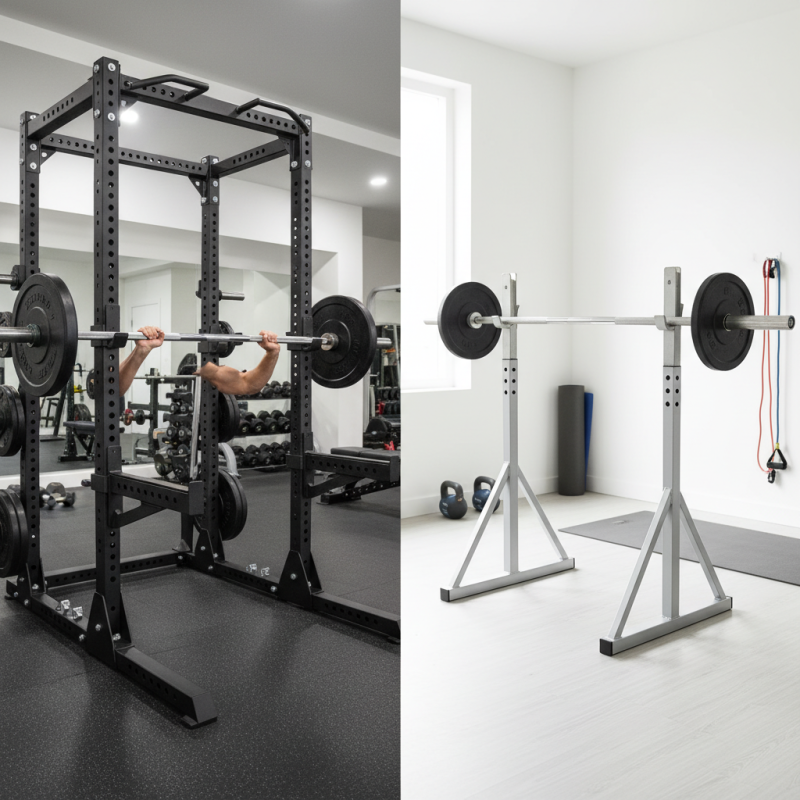
When it comes to weight training, power racks and squat stands are pivotal for strength enthusiasts.
Power racks provide a robust structure. They offer safety features like adjustable safety bars. This is crucial for lifters, especially when lifting heavy weights.
With their versatility, power racks accommodate a range of exercises. You can perform squats, bench presses, and more within one frame.
Moreover, ease of use plays a significant role in selecting gym equipment.
Many users find power racks more secure. However, setting them up can be challenging for some. Instructions may not always be clear.
Additionally, the footprint of power racks is larger than squat stands. This can be an inconvenience for those with limited space.
On the other hand, squat stands are portable and easier to assemble. They are perfect for minimalistic setups.
Yet, they lack the safety features inherent to power racks. This raises concerns about safety, especially during heavy sets.
Casual lifters may prefer the simplicity of squat stands.
More advanced users might demand the security power racks offer.
It's essential to evaluate your personal fitness goals when choosing.
Squat stands are an essential piece of equipment for many fitness enthusiasts. They offer unique advantages that set them apart from power racks. A squat stand typically requires less space. This makes it a good choice for home gyms with limited room. The compact design allows users to perform various exercises without being constrained by size.
One of the key features of squat stands is their portability. Many models are lightweight and easy to move. This feature is especially beneficial for those who might want to change their workout setup frequently. Additionally, squat stands often come with adjustable height settings. Users can customize the barbell height to match their own comfort level. According to a report by the National Strength and Conditioning Association, proper bar height can enhance squatting performance and reduce injury risk.
However, squat stands may not offer the same level of safety as power racks. There is a risk during heavy lifts as they may not provide side-to-side stability. A survey indicated that around 30% of lifters have experienced accidents due to equipment instability. This highlights the importance of considering which equipment best suits one's training style and safety needs when making a purchase decision.
| Feature | Power Rack | Squat Stand |
|---|---|---|
| Stability | High stability due to larger base | Moderate stability, may require additional weights |
| Versatility | Supports various exercises (squats, bench press, etc.) | Primarily focuses on squats and overhead lifts |
| Space Requirement | Requires more floor space | Compact design, saves space |
| Price Range | Higher price due to more features | More affordable for budget-conscious users |
| Ease of Use | Easier for beginners with built-in safety features | Requires more technique and experience |
When choosing between a power rack and a squat stand, understanding their key differences is vital. A power rack typically offers more versatility. It includes adjustable safety bars and can support various exercises, such as bench presses and pull-ups. This feature is critical for heavy lifters who prioritize safety. In contrast, a squat stand generally takes up less space. This makes it ideal for smaller home gyms, allowing users to perform squats and similar movements without a bulky setup.
Regarding stability, industry studies show that power racks must accommodate more weight. A report from the National Strength and Conditioning Association indicates that lifters can safely handle heavier weights with power racks. This enhances confidence during challenging lifts. However, squat stands can lack this safety feature, leading to potential risks when lifting alone.
**Tips for Choosing**: If you have limited space, consider a squat stand for essential lifts. If safety and variety matter most, opt for a power rack. Additionally, always explore user reviews and expert recommendations to gauge reliability. Understand your training needs deeply; not every piece of equipment fits every athlete. Personalization in your gym setup is crucial for sustained progress.
When setting up a home gym, choosing the right equipment is crucial. Power racks and squat stands each serve unique purposes. A power rack offers safety and versatility. It can support various exercises, including squats and bench presses. You can lift heavy weights without a spotter, reducing the risk of injury. However, it occupies more space and is generally more expensive.
On the other hand, squat stands are compact and affordable. They are easier to move and fit into small spaces. However, they may lack the safety features of power racks. This could be a concern for beginners or those lifting heavy weights. Think about how you plan to use the equipment. Will you be performing a range of exercises? Or will your focus be primarily on squats? Personal preferences and workout styles will greatly influence your decision. Reflect on the limitations of each option before making a choice. It’s essential to pick equipment that aligns with your fitness goals and available space.
When comparing power racks and squat stands, cost-effectiveness often sways gym enthusiasts. Both equipment types offer unique advantages. A power rack provides more safety and versatility. It accommodates various workouts and allows for adjustments. However, it typically comes with a higher price tag and requires more space.
In contrast, squat stands are more budget-friendly. They take up less space and are portable. This makes them ideal for home gyms with limited room. However, they may not offer the same safety features as power racks. You should feel confident when squatting without a spotter. Choosing between them depends on your training needs and budget.
Tip: Always consider your workout goals. Evaluate how often you'll use the equipment. If you're focused on heavy lifting, a power rack might be worth the investment. Conversely, for occasional use, a squat stand might be sufficient. Make sure to read reviews that reflect user experiences for informed decisions.
: Power racks provide a secure structure with adjustable safety bars. They support diverse exercises like squats and bench presses.
No, many users find setup challenging. Instructions can often be confusing or unclear.
Squat stands are more portable and easier to assemble. However, they lack safety features found in power racks.
Their compact design makes them ideal for small home gyms. They take up less space than power racks.
Yes, many squat stands have adjustable height settings for barbell customization, enhancing user comfort.
No, squat stands may not provide the same stability. There's a risk of accidents during heavy lifting.
Casual lifters or those with minimal space may prefer squat stands for their simplicity.
Evaluate personal fitness goals and safety needs, as equipment features greatly impact workout effectiveness.
Advanced lifters might need the additional safety and security that a power rack provides during heavy lifts.
Proper bar height can enhance squatting efficiency and reduce the risk of injuries.
In the article "China Top 10 Power Rack vs Squat Stand: Which is Better?", a comprehensive overview of the top power racks is provided, alongside a detailed explanation of squat stands, their features, and benefits. The key difference between a power rack and a squat stand is that power racks offer additional safety and versatility, allowing for a wider range of exercises and setups, while squat stands are more compact and portable, suitable for limited spaces.
When considering which equipment to choose for a home gym, it's essential to evaluate your workout needs and space constraints. The article also highlights the cost-effectiveness of both options, allowing readers to make informed decisions based on their budget and fitness goals. Ultimately, understanding "What is the difference between a power rack and a squat stand?" can significantly impact your choice in creating an effective workout environment.

GoLive Fitness