Top 10 Tips to Increase Your Bench Press Maximum Strength?

Time:2026-06-13 Author:Ethan
0%

Bench pressing is essential for building upper body strength. According to the National Strength and Conditioning Association, proper bench press technique can optimize strength gains. Many lifters seek the question: "How to increase my bench press max?" To address this, expert strength coach Mike Matthews emphasizes, "Building your bench press isn't just about pushing heavy weights; it's about the right strategy."

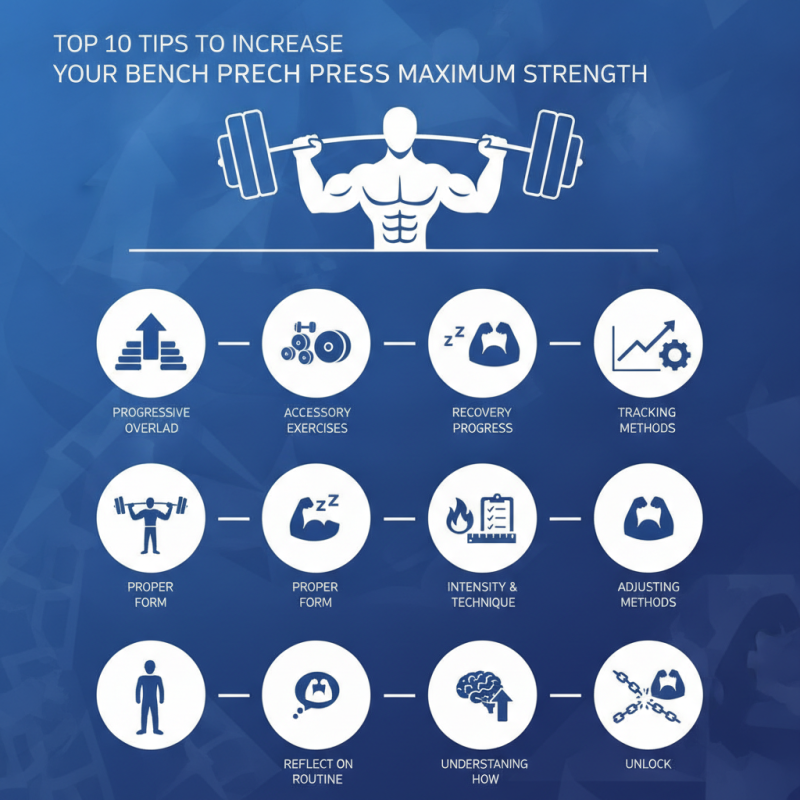
A recent report by the American College of Sports Medicine highlights that incorporating varied training techniques can enhance performance. These techniques include progressive overload and accessory exercises. Interestingly, many athletes overlook recovery, which is crucial for muscle growth. Tracking progress offers insights into what actually works. Failing to adjust methods can lead to stagnation in strength levels.

It’s vital to reflect on your current routine. Are you focused on form or numbers? Striking a balance between intensity and technique is essential for improvement. Most lifters can benefit from fine-tuning their approach. By understanding how to increase the bench press max, one can unlock the potential for significant strength development.
Top 10 Tips to Increase Your Bench Press Maximum Strength?

Understanding the Bench Press: Mechanics and Muscles Involved

The bench press primarily targets the pectoralis major, deltoids, and triceps. Research shows that proper technique maximizes strength gains and reduces injury risk. According to a study published in the Journal of Strength and Conditioning Research, lifters who focus on form can increase their maximum strength by up to 20%. This highlights the importance of understanding your body mechanics.

When performing the bench press, the bar should descend slowly to your chest, and your feet should remain flat on the ground. Engage your shoulder blades and core for stability. Incorporating variability in your training helps too. Try different grip widths or tempo changes. Varied routines can prevent plateaus.

To increase your bench press maximum, consider weight progression. Gradual weight increases, even if just 5 pounds, stimulate muscle growth. Also, remember to include accessory exercises like push-ups and tricep dips in your regimen. These exercises enhance overall pressing strength, aiding in both performance and stability. Focus on what feels right for your body and be patient with progress.

Top 10 Tips to Increase Your Bench Press Maximum Strength

This chart illustrates the potential improvement in bench press maximum strength based on the application of various training tips over time. Each bar represents the weight increment (in lbs) that can be achieved by consistently applying each specific tip after 8 weeks of focused training.

Setting Realistic Goals for Your Bench Press Improvements

Setting realistic goals is crucial for improving your bench press. Many lifters aim too high too quickly. This can lead to frustration and injury. Start with small, achievable targets. Aiming for a 5% increase over six weeks is a practical goal. It allows for steady progress without overwhelming yourself.

Track your progress diligently. Keeping a log creates accountability. You’ll see where you excel and where you need to improve. Celebrate small victories. Did you hit a new personal record? That's worth noting. But, if you missed a target, don’t be discouraged. Reflect on your training and nutrition. Adjust your strategy as needed.

Consider the importance of rest and recovery. Rushing into heavier weights can lead to burnout. Listen to your body. If you're overly fatigued, take a break. Your muscles need time to repair and grow stronger. Remember, the journey to a stronger bench press is personal. Everyone progresses at their own pace. Focus on your path, and the results will follow.

Perfecting Your Technique: Key Form Tips for Safe Lifting

Perfecting your bench press technique is crucial for maximizing strength while ensuring safety. Research shows that proper form can significantly reduce the risk of injury. A study from the National Strength and Conditioning Association highlights that lifters with good form can increase their bench press by nearly 20% over six months, compared to those who struggle with their technique.

One key aspect to focus on is your grip width. Many lifters fail to find their optimal hand position, which can affect muscle activation. A study indicated that a shoulder-width grip engages the chest optimally. However, the correct position can vary based on individual anatomy. Experimenting within this range may lead to better performance. Pay attention to your elbow positioning as well. A 45-degree angle is often recommended, helping to strain less on shoulder joints.

Breathing techniques play a critical role too. Inhale deeply before the lift and exhale during the press. This technique stabilizes your core and supports the spine. Lifters often overlook this, leading to fatigue and subpar performance. Contrarily, maintaining focus on breathing can enhance strength output. Small adjustments can lead to significant gains. Remember, refining your technique takes time and patience. Consistent practice and reflection on your form can lead to continuous improvement.

Incorporating Accessory Exercises to Boost Bench Press Strength

Incorporating accessory exercises is crucial for boosting your bench press strength. These exercises can target smaller muscle groups. They can help improve your overall stability and power. To start, consider adding tricep dips. This exercise emphasizes your triceps, which are vital during the bench press.

Another effective accessory exercise is the floor press. It focuses on the pressing motion while reducing shoulder strain. The floor press helps in improving lockout strength. Many lifters neglect their shoulder stability, leading to imbalances. Therefore, include external rotations with bands. This simple exercise can enhance shoulder health and support injury prevention.

Pay attention to your form. Even with accessory exercises, improper technique can lead to setbacks. Regularly assess your progress and modify as necessary. Aim to incorporate these movements into your routine at least once a week. They will help bridge the gap to a stronger bench press. Experimenting with intensity and volume while tracking your results can yield significant improvements.

Top 10 Tips to Increase Your Bench Press Maximum Strength

Tip Number Tip Description Accessory Exercise Frequency
1 Focus on Proper Technique Push-ups 3 times a week
2 Increase Training Volume Dumbbell Bench Press 2 times a week
3 Incorporate Heavy Singles Board Press Once a week
4 Utilize Spotters for Safety Incline Bench Press 2 times a week
5 Progressively Overload Chest Flyes 2 times a week
6 Incorporate Speed Work Medicine Ball Throws Once a week
7 Rest and Recovery Tricep Dips 2 times a week
8 Utilize a Full Range of Motion Overhead Press 2 times a week
9 Optimize Nutrition Protein Shakes Daily
10 Stay Consistent Cable Crossovers 2 times a week

Nutrition and Recovery: Fueling Your Body for Maximum Power

Fueling your body properly is essential for maximizing bench press strength. Nutrition plays a crucial role in muscle recovery and growth. Consuming quality protein sources, such as lean meats and legumes, helps repair muscle fibers after each workout. Aim for 20-30 grams of protein within 30 minutes post-exercise. This aids in effective recovery.

Stay hydrated to enhance performance. Water supports various bodily functions and muscle health. Dehydration can lead to fatigue and reduced strength. Make sure to drink enough water throughout the day, especially before and after your workout.

Consider timing your meals strategically. Eating carbohydrates before lifting can provide the energy needed for intense sessions. Focus on complex carbs like sweet potatoes and whole grains. These fuels should be consumed about an hour before your workout. Remember, each person’s needs may vary, and fine-tuning your diet requires reflection and adjustment. What works for one may not work for another; be open to experimenting with different foods and timings.

FAQS

: Why is setting realistic goals important for bench press improvements?

: Realistic goals prevent frustration and injuries. Aim for achievable targets, like a 5% increase in six weeks.

How can I track my bench press progress effectively?

Keeping a log helps create accountability. Note your achievements and where you need improvement.

What should I do if I miss my target?

Don't be discouraged. Reflect on your training and nutrition to adjust your strategy.

Why is rest and recovery necessary for bench press training?

Rushing into heavier weights can cause burnout. Your muscles need time to repair and grow stronger.

What are some effective accessory exercises for bench press strength?

Try tricep dips and floor presses to improve stability and power during the bench press.

How can accessory exercises reduce shoulder strain?

The floor press minimizes shoulder strain while focusing on the pressing motion, aiding lockout strength.

What technique should I use with accessory exercises?

Proper form is crucial. Improper technique can lead to setbacks in progress.

How often should I incorporate accessory exercises into my routine?

Aim to include them at least once a week for optimal results.

How should I approach experimenting with intensity and volume?

Track your results to understand what improves your bench press strength most effectively.

Is progress the same for everyone in bench press training?

No, everyone progresses at their own pace. Focus on your journey for the best results.

Conclusion

To enhance your bench press maximum strength, it's essential to understand the mechanics of the lift, including the specific muscles utilized during the exercise. Setting realistic goals for improvement is crucial for tracking progress and maintaining motivation. Focus on perfecting your technique by adhering to key form tips that ensure safe lifting practices, helping to prevent injuries and maximize strength gains.

In addition to refining your form, incorporating accessory exercises can significantly boost your bench press strength by targeting supporting muscle groups. Lastly, paying attention to nutrition and recovery is vital; fueling your body properly and allowing adequate rest will enable you to perform at your best. By following these strategies, you can effectively answer the question, "How to increase my bench press max?" and achieve significant improvements in your overall strength.

Ethan

Ethan

Ethan is a seasoned marketing professional with a deep expertise in our company's innovative product line. With a passion for sharing knowledge and insights, he takes the lead in regularly updating our corporate blog, where he explores industry trends, product features, and effective marketing......