Top 10 Muscles Worked on Parallel Bars?

Time:2026-10-13 Author:Mason
0%

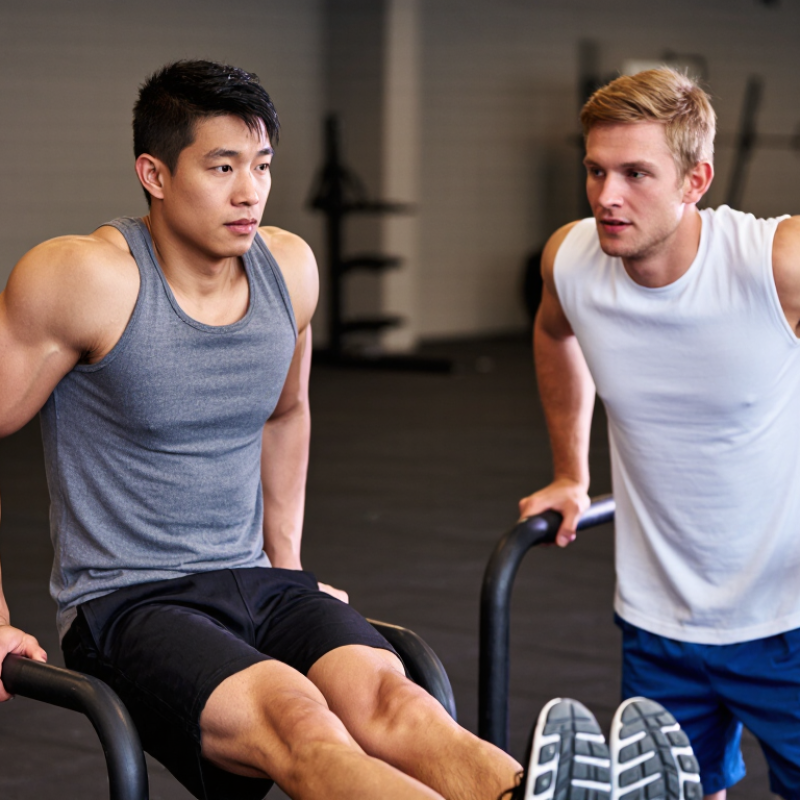
Parallel bars look simple, but they demand precise control from your hands, shoulders, trunk, and legs. A steady dip can make your triceps burn quickly, while an L-sit exposes weaknesses around your abdomen and hip flexors. So, what muscles do parallel bars work? The answer depends on your exercise, body angle, grip, range of motion, and training experience.

This guide examines the top 10 muscles involved in common parallel-bar movements, including dips, support holds, L-sits, and controlled transitions. It considers the prime movers and the smaller stabilizers that keep your shoulders and spine organized. In practical training, I have noticed that two athletes can perform the same repetition but feel it in different areas. One may feel strong chest involvement. Another may notice shoulder fatigue first.

Technique matters.

Keeping your shoulders depressed, elbows controlled, and ribs from flaring can change the exercise considerably. However, muscle sensation alone does not prove that a muscle is working hardest. Anatomy, movement mechanics, and progressive loading provide a more reliable explanation. This ranking is useful, but it is not universal. Some muscles may deserve a different position based on your style and mobility. That limitation is worth acknowledging. Use the list as a training framework, not an absolute rule, and stop when sharp pain replaces normal muscular effort.
Top 10 Muscles Worked on Parallel Bars?

Parallel Bars Training: Movements, Mechanics, and Muscle Recruitment

Top 10 Muscles Worked on Parallel Bars?

Parallel bars training changes muscle recruitment with every angle and movement. Dips strongly involve the triceps, pectoralis major, and anterior deltoids. A deeper torso lean usually increases chest demand, while a more upright position shifts work toward the triceps. Your lats and teres major help control the shoulder during descent and support. Serratus anterior, trapezius, and rhomboids stabilize the shoulder blades. The rectus abdominis and obliques maintain body tension during L-sits, tuck raises, and controlled holds. Ten muscles can work together, but not equally.

Mechanics matter more than simply counting repetitions. Press down through the bars, keep your wrists stacked, and avoid dropping quickly into the bottom position. During a support hold, locked elbows and active shoulders create a stable base. My early mistake was lifting my chest without controlling my ribs. That reduced abdominal tension and irritated my shoulders. Small corrections helped. If discomfort feels sharp or persistent, reduce the range and seek qualified guidance.

Tips: Start with short support holds and assisted dips. Keep your shoulders lower than your ears. Use a slow three-second descent to reveal weak positions. Film one set from the side; balance often looks different than it feels. Leave one or two clean repetitions in reserve, especially when your elbows or shoulders feel tired.

The Ten Primary Muscles Worked on Parallel Bars

Top 10 Muscles Worked on Parallel Bars?

Parallel bars train ten primary muscles through dips, support holds, and L-sits. The pectoralis major drives the pressing phase, while the triceps brachii straightens the elbows. The anterior deltoids stabilize the shoulders under load. The latissimus dorsi helps control the descent and keeps the upper arm close. The trapezius, rhomboids, and serratus anterior support scapular positioning. Grip demands also challenge the forearm flexors. During a controlled L-sit, the rectus abdominis and internal and external obliques resist unwanted movement.

The loading pattern changes with technique. A deeper dip usually increases chest and shoulder demand, but excessive depth may irritate vulnerable shoulders. A more upright torso often shifts effort toward the triceps. This is not perfectly fixed. Individual anatomy matters.

ACSM’s Guidelines for Exercise Testing and Prescription recommends resistance training two to three days weekly, commonly using one to three sets of eight to twelve repetitions for general strength development. That guidance supports structured parallel-bar practice, but it does not prove equal activation across all ten muscles. NSCA technical guidance also emphasizes progressive overload, stable technique, and controlled movement. In practice, I would begin with assisted support holds, then add slow dips and knee raises. Small errors matter. Bent wrists, shrugged shoulders, or swinging legs can hide weak control and reduce training quality. Track depth, tempo, and pain, not only repetitions.

How Dips, L-Sits, and Support Holds Target Different Muscles

Parallel bars expose different muscles depending on how you move, not merely how heavy you lift. Dips place the chest, triceps, and front shoulders under a deep pressing demand. A slight forward lean increases chest involvement, while a more upright torso shifts work toward the triceps. Keep your shoulders controlled at the bottom. Excessive depth can feel impressive, but it may irritate the front shoulder.

L-sits change the challenge completely. Your hip flexors lift the legs, while the rectus abdominis and obliques prevent your pelvis from collapsing. The quadriceps stay tense as you extend the knees. In practice, straight legs demand far more control than tucked knees. Many athletes overlook the shoulders, which must depress and stabilize the body throughout the hold. A 2023 International Consensus Position Stand from the International Universities Strength and Conditioning Association supports using varied loading and exercise angles for balanced muscle development.

Support holds look simple. They are not. The triceps maintain elbow extension, while the lower trapezius, serratus anterior, and rotator cuff help keep the shoulder girdle stable. The American College of Sports Medicine recommends resistance training at least two days weekly, with gradual progression in volume and difficulty. That supports adding seconds before forcing harder variations. EMG readings can show activation, but they do not prove muscle growth, a limitation highlighted in resistance-training research. My own coaching observation is less tidy: shaking often reflects poor breathing, not failure. Pause, reset, and reassess.

Factors That Change Muscle Activation on Parallel Bars

Top 10 Muscles Worked on Parallel Bars

Parallel bars can train more than the chest and triceps. Dips strongly involve the pectorals, triceps, and anterior shoulders. Your lats, rhomboids, and trapezius muscles help control the shoulders. The abdominals, obliques, glutes, and quadriceps stabilize your body during each repetition.

Muscle activation changes with technique. A forward torso lean usually increases chest involvement. A more upright position shifts effort toward the triceps. Wider hand placement may challenge the chest, but it can also stress the shoulders. Elbows drifting outward often reduces control. Keep them moderately close. Lower until your shoulders feel challenged, not forced. Depth is personal.

Speed matters too. A slow descent creates more tension and exposes weak positions. A brief pause at the bottom demands control. Fast repetitions may feel powerful, yet they can hide poor shoulder mechanics. Fatigue changes everything. Near failure, your hips may swing and your shoulders may rise. That is useful feedback, not always a successful repetition. Research supports controlled resistance training, but individual response still varies.

Tips: Start with a stable support hold. Brace your ribs over your pelvis. Use assistance when full bodyweight repetitions become uneven. Record one set from the side. Review your torso angle, elbow path, and depth. Mild muscle fatigue is expected. Sharp shoulder pain is not. A qualified coach or clinician can assess persistent discomfort.

Top 10 Muscles Worked on Parallel Bars

The chart shows a normalized relative involvement index based on the joint actions and stabilization demands of a controlled parallel-bar dip. It is not a direct EMG percentage and varies with technique, range of motion, body position, and training intensity.

Muscle activation changes when the torso leans forward, the elbows flare or stay close, the shoulders move through a deeper range, the legs are held still, or additional resistance is used. A more upright position generally emphasizes elbow extension, while a forward lean increases the contribution of the chest and anterior shoulder.

Progressions, Technique, and Joint Safety for Balanced Development

Parallel bars train more than the triceps. Dips load the chest, anterior shoulders, serratus anterior, forearms, and abdominal muscles. A stable support hold teaches shoulder depression before pressing begins. Keep the ribs gently down, wrists straight, and elbows tracking close to the body. A slight forward lean increases chest involvement. An upright torso shifts more work toward the triceps. These details matter. Small changes can alter joint stress.

Progress slowly: support holds, feet-assisted dips, controlled negatives, then full repetitions. Use three-second descents and stop before shoulder discomfort appears. The American College of Sports Medicine recommends resistance training at least twice weekly, while its 2021 position stand supports multiple loading ranges when effort is appropriate. The World Health Organization’s 2020 guidelines also recommend muscle-strengthening activity on two or more days weekly. Those targets support consistency, not reckless volume.

Shoulder depth is personal. Do not force the lowest position. Excessive shoulder extension can irritate the front of the joint, especially after fatigue. Keep two repetitions in reserve during early sessions. Pain is feedback, not proof of progress. My early mistake was chasing deeper dips with loose shoulders. It looked stronger, but control was missing. A physical therapist or qualified strength coach can assess asymmetry, wrist limits, and previous injuries. Track range, tempo, and recovery, not repetitions alone. Balanced development also requires pulling work, such as rows or pull-ups, because pressing-only training may leave the upper back underchallenged.

Top 10 Muscles Worked on Parallel Bars? - Progressions, Technique, and Joint Safety for Balanced Development

# Muscle Group Main Role on Parallel Bars Best Exercise or Position Useful Progression Key Technique Cue Joint-Safety Consideration
1 Triceps brachii Extends the elbow during pressing and lockout. Parallel-bar dip and straight-arm support. Support hold → assisted dip → controlled bodyweight dip. Keep the elbows tracking generally backward rather than flaring widely. Use a pain-free depth and avoid forcefully snapping the elbows into lockout.
2 Pectoralis major Assists shoulder extension and horizontal adduction, especially with a forward-leaning dip. Chest-focused parallel-bar dip. Foot-assisted dip → partial-range dip → full controlled dip. Lean slightly forward while keeping the ribs controlled and shoulders stable. Do not chase excessive depth if the front of the shoulder feels pinched.
3 Anterior deltoid Helps flex and stabilize the shoulder during dips and support positions. Dip support, assisted dip, and controlled press-out. Scapular support hold → assisted dip → longer-range dip. Press the bars down and maintain active shoulders instead of hanging passively. Build support strength gradually; stop if shoulder pain, instability, or numbness occurs.
4 Serratus anterior Helps upwardly rotate and stabilize the shoulder blade against the rib cage. Active support hold and scapular push-up variation. Feet-assisted support → unassisted support → controlled scapular depression and elevation. Keep the neck long and gently push the body away from the bars. Avoid shrugging aggressively or collapsing between the shoulders.
5 Rectus abdominis Resists spinal extension and supports trunk flexion in L-sit work. Tuck hold, knee raise, and L-sit. Tuck support → one-leg extension → full L-sit. Posteriorly tilt the pelvis and keep the ribs from flaring upward. Use short, controlled holds rather than arching the lower back to gain time.
6 External obliques Resist trunk rotation and side bending during unilateral or asymmetrical loading. L-sit, knee raise, and controlled side-to-side support. Tuck hold → alternating knee raise → extended-leg hold. Keep both shoulders level and move the legs without twisting the torso. Reduce range or duration if the lower back or ribs lose control.
7 Hip flexors Lift and hold the thighs during knee raises and L-sits. Supported knee raise and L-sit progression. Bent-knee raise → one-leg L-sit → straight-leg L-sit. Initiate the lift from the hips while maintaining abdominal bracing. Avoid swinging; stop if there is sharp anterior hip pain or persistent hip clicking.
8 Quadriceps Maintain knee extension and contribute to a rigid L-sit position. Straight-leg support and L-sit. Bent-knee hold → one-leg straightening → full-leg extension. Actively straighten the knees and point the toes without forcing the joints. Keep a small, comfortable knee softness if full lockout causes discomfort.
9 Latissimus dorsi Contributes to shoulder extension and helps stabilize the upper body during support and transition work. Active support, dip transition, and controlled bar press. Scapular control drill → assisted transition → slow transition practice. Keep the shoulders packed without forcing them down or restricting natural movement. Prioritize smooth control; do not use a sudden kip or aggressive shoulder pull.
10 Forearm and hand muscles Grip the bars and stabilize the wrist during support, dips, and transitions. Support hold, dip, and controlled hand-balancing preparation. Feet-assisted grip hold → short unassisted hold → longer controlled sets. Wrap the fingers securely around the bars and keep the wrists neutral. Use a comfortable grip width and stop if wrist numbness or sharp pain develops.
Balanced-development note: Parallel-bar training emphasizes pressing strength, shoulder stability, trunk control, and hip-flexion endurance. Combine it with pulling, horizontal rowing, external-rotation, and lower-body exercises for more balanced overall development.
Safety note: Warm up the wrists, elbows, shoulders, and trunk; progress only when technique remains controlled; and use a pain-free range of motion. Persistent or sharp pain should be assessed by a qualified healthcare professional.

FAQS

Which muscles work most during parallel bar dips?

Dips mainly train the chest, triceps, and front shoulders. Your back muscles stabilize the shoulder joint. Abdominals help control body position.

How does torso angle change a dip?

A slight forward lean usually increases chest involvement. An upright torso shifts more effort toward the triceps. Small changes matter.

How deep should I lower during dips?

Lower until your shoulders feel challenged, not forced. Excessive depth may irritate the front shoulder. Your comfortable range can change with fatigue.

What is the safest way to begin parallel bar training?

Start with short support holds and assisted dips. Keep your elbows controlled and shoulders away from your ears. Do not rush.

What muscles does an L-sit develop?

Hip flexors lift the legs during an L-sit. The abdominals and obliques keep your pelvis from collapsing. Quadriceps tension helps maintain straight knees.

Why do support holds feel harder than they look?

The triceps lock the elbows while shoulder stabilizers maintain alignment. Your ribs should stay stacked over your pelvis. Shaking is common.

How can I improve my technique?

Use a slow three-second descent. Film one side view and inspect your torso angle. Keep one or two clean repetitions in reserve.

Does muscle activation prove muscle growth?

Not by itself. Activation measurements show effort, but they cannot confirm future muscle growth. Training response differs between people.

What should I do if my shoulders hurt?

Stop sharp or persistent pain. Reduce the range and use assistance. I once lifted my chest while losing rib control, which irritated my shoulders.

How often should I train on parallel bars?

Two weekly sessions can support gradual progress. Add seconds or repetitions before harder variations. Recovery matters, though my own progression was not perfectly consistent.

Conclusion

Parallel bars training is a versatile form of bodyweight exercise that challenges multiple muscle groups through movements such as dips, L-sits, and support holds. What muscles do parallel bars work? The primary muscles include the chest, triceps, shoulders, abdominal muscles, obliques, hip flexors, glutes, quadriceps, forearms, and upper back. Each exercise emphasizes these muscles differently: dips focus on pressing strength, L-sits demand intense core and hip-flexor engagement, while support holds develop shoulder stability, arm endurance, and body control.

Muscle activation can change with body position, range of motion, grip width, tempo, and individual technique. Beginners should build strength gradually with supported holds, controlled dips, and tuck-based progressions before attempting advanced variations. Maintaining stable shoulders, neutral wrists, and deliberate movement helps reduce unnecessary joint stress. With consistent practice and balanced programming, parallel bars can improve upper-body strength, core control, coordination, and overall muscular development.

Mason

Mason

Mason is a seasoned marketing professional with a deep expertise in the company's offerings and a passion for driving brand awareness. With a strong background in digital marketing strategies, he has an innate ability to connect with diverse audiences and effectively communicate product benefits.......