Why Am I Not Seeing Results From Sit Ups in 2026?

Time:2026-10-03 Author:Oliver
0%

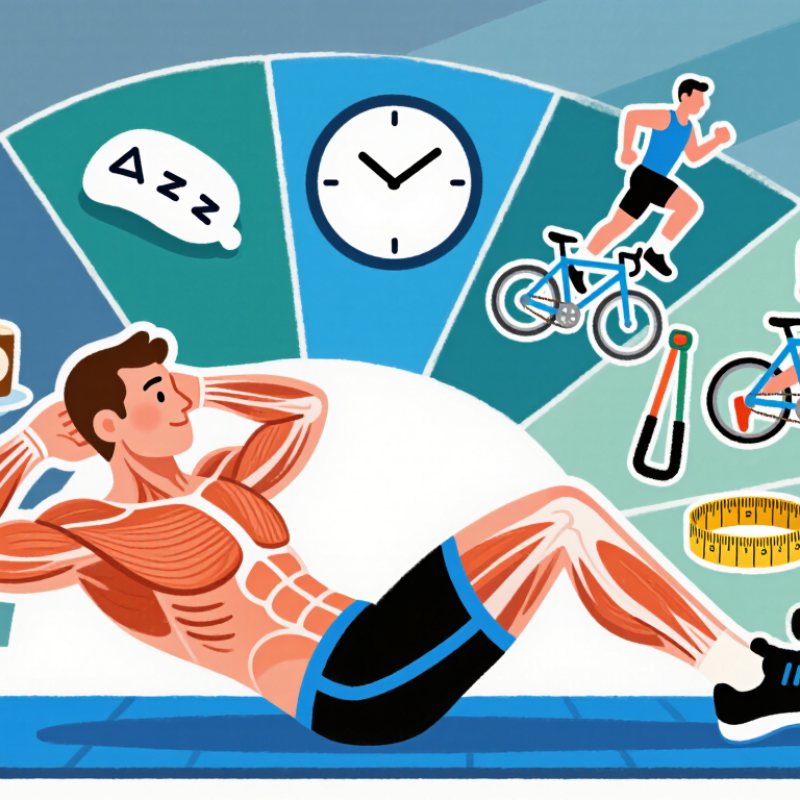
“Why am I not seeing results from sit ups?” This question appears often in gyms, coaching forums, and fitness consultations. The answer is rarely simple. Sit ups strengthen trunk muscles, but they cannot selectively remove abdominal fat. Genetics, nutrition, sleep, training volume, and stress can all influence visible progress.

The American College of Sports Medicine recommends regular aerobic activity and muscle-strengthening exercise for better overall fitness. However, sit ups alone provide limited movement variety. They mainly repeat spinal flexion, while your core also stabilizes the spine during lifting, walking, running, and carrying. The World Health Organization similarly emphasizes combining aerobic exercise with muscle-strengthening activities across major muscle groups. One movement cannot cover every demand.

Results are slower.

The Centers for Disease Control and Prevention reported that only about one-quarter of U.S. adults met both aerobic and muscle-strengthening guidelines in 2020. This suggests a broader training pattern may matter more than adding endless repetitions. A 2026 review of your routine should examine progression, recovery, food intake, and waist measurements, not only mirror changes. A stronger core may develop before visible definition appears. The mirror can mislead. I have also seen people count 100 rushed repetitions, then overlook controlled technique and consistent resistance. That approach feels productive, but it may not create enough stimulus. This guide uses evidence-based principles, while acknowledging individual differences and imperfect progress. It will explain what sit ups can achieve, what they cannot, and how to measure meaningful results safely.
Why Am I Not Seeing Results From Sit Ups in 2026?

Why Sit-Ups Fail in 2026: Abdominal Anatomy and Exercise Limits

Why Am I Not Seeing Results From Sit Ups in 2026?

Why Sit-Ups Fail in 2026: Abdominal Anatomy and Exercise Limits

Sit-ups do not fail because your rectus abdominis is inactive. They often fail because one exercise is expected to build muscle and remove belly fat. The rectus abdominis flexes your spine, while the obliques rotate and stabilize your trunk. Your hip flexors also work during sit-ups, especially when your feet are anchored. That can shift effort away from your abdominal wall. It may also irritate your lower back when technique breaks down.

Research exposes this mismatch. In a six-week controlled study published in the Journal of Strength and Conditioning Research, abdominal exercises did not significantly reduce abdominal fat or waist size. The American College of Sports Medicine recommends progressive resistance training, not endless repetitions, for muscular development. Its 2021 exercise guidelines also emphasize gradual overload and recovery. I would not call sit-ups useless. They can improve trunk endurance. They simply have limits.

Visible definition requires more than repeated spinal flexion. The World Health Organization’s 2020 guidelines recommend 150–300 minutes of moderate weekly activity, plus muscle-strengthening work on at least two days. A practical plan might include dead bugs, side planks, loaded carries, and controlled curl-ups. Add walking or cycling, then monitor food intake and sleep. Small details matter. A rushed set of 100 sit-ups may feel impressive but provide little progression. I have also seen people mistake soreness for progress. That assumption deserves reconsideration. Genetics, fat distribution, training age, and recovery can change the timeline considerably.

Training Dose: WHO Recommends 150–300 Minutes of Weekly Activity

Why Am I Not Seeing Results From Sit Ups in 2026?

Sit-ups can strengthen your abdominal muscles, but they rarely remove belly fat alone. Your weekly training dose matters more than chasing hundreds of repetitions. The World Health Organization recommends 150–300 minutes of moderate activity each week. It also advises muscle-strengthening exercises on at least two days.

That target may sound simple. It is not always easy to reach. The WHO Global Status Report on Physical Activity 2022 found that nearly 1.8 billion adults were not active enough in 2022. This inactivity increases risks linked with heart disease, diabetes, and poor mental health. In my experience, people often count sit-ups carefully but overlook walking, cycling, and recovery. I have made that mistake too. More effort does not always mean better planning.

Tips: Start with three 30-minute brisk walks weekly. Add two short strength sessions for your legs, back, chest, and core. Keep sit-ups controlled, with your lower back supported. Increase time gradually, not painfully. Track weekly minutes, waist measurements, and energy levels. The numbers may change slowly. That can feel discouraging, but one week rarely proves whether a plan works. A 2023 systematic review in Sports Medicine also supports combining aerobic and resistance training for improving body composition, rather than relying on one exercise.

Energy Balance: Why a Sustained Calorie Deficit Reveals Abdominal Definition

Why Am I Not Seeing Results From Sit Ups in 2026?

Sit-ups can strengthen your abdominal muscles, but they cannot choose where fat disappears. A six-week study in the Journal of Strength and Conditioning Research found that abdominal exercise improved endurance without reducing abdominal fat. Your waistline changes when total energy intake stays below total energy expenditure. That sounds simple. It rarely feels simple.

The 3,500-calorie rule is only a rough classroom model. Metabolism, water retention, movement, and appetite can change during dieting. The National Institutes of Health Body Weight Planner reflects these adaptations more realistically. A modest deficit, monitored for several weeks, is often easier to sustain than aggressive restriction. Track waist measurements, body weight averages, hunger, and training performance. Daily scale changes can mislead you.

Protein-rich meals and resistance training help protect lean tissue while fat decreases. The American College of Sports Medicine supports regular resistance exercise, while World Health Organization guidelines recommend 150–300 minutes of moderate aerobic activity weekly. These figures support health, not guaranteed visible abs. Definition also depends on genetics, muscle thickness, sleep, and starting body-fat levels. That part is easy to underestimate.

Be honest with the data. Weekend portions may erase weekday deficits. I have seen people blame sit-ups when consistency was the real problem. The plan may be imperfect. Adjust slowly, and give your measurements enough time to reveal a trend.

Exercise Selection: ACE EMG Research Beyond Traditional Sit-Ups

Why Am I Not Seeing Results From Sit Ups in 2026?

Sit-ups can feel difficult without producing the results you expect. Their movement repeatedly bends the spine and often involves the hip flexors. If your pelvis tilts forward, your abdomen may work less than planned. Your lower back may complain first.

Exercise selection matters more than endless repetitions. Comparative EMG research suggests that some movements create stronger abdominal activation than traditional sit-ups. Bicycle crunches, reverse crunches, and controlled leg-raise variations can challenge the rectus abdominis and obliques differently. A plank adds anti-extension control, which sit-ups do not train well. That matters during lifting, running, and daily movement.

EMG is useful, but it is not a complete scoreboard. Higher electrical activity does not guarantee faster muscle growth or less body fat. Technique, resistance, recovery, nutrition, and consistency still shape your outcome. Slow each repetition. Keep your ribs gently down. Stop before your hips take over.

I used to treat soreness as proof of progress. That was too simple. Some sessions felt brutal, yet my control barely improved. A better approach is rotating exercises and tracking repetitions, stability, and waist measurements. If your back arches during leg raises, shorten the range. If your neck strains during crunches, reduce the speed. Small corrections often reveal the real problem. Sit-ups are one option, not a complete abdominal program.

Why Am I Not Seeing Results From Sit-Ups in 2026? — Exercise Selection: EMG Research Beyond Traditional Sit-Ups
Exercise Selection Primary Muscles Emphasized Relative EMG Finding in Controlled Comparisons Movement Characteristics Practical Training Takeaway
Traditional Sit-Up Rectus abdominis, hip flexors, and obliques as stabilizers Moderate abdominal activation; the hip flexors contribute substantially as the trunk moves through a larger range of motion. Fuller trunk flexion with the feet commonly anchored or stabilized Useful for general trunk-flexion practice, but it is not automatically the most effective choice for increasing abdominal muscle stimulus.
Bicycle Maneuver Rectus abdominis and internal and external obliques Among the highest rectus-abdominis and oblique activation levels reported in acute surface-EMG comparisons. Alternating trunk rotation with opposite hip and knee flexion Provides both flexion and rotation demands; use controlled tempo rather than pulling on the neck or rushing the repetitions.
Captain’s-Chair Knee Raise Rectus abdominis, obliques, and hip flexors Consistently placed in the high-activation group for the rectus abdominis in comparative EMG testing. Supported upper body with repeated hip flexion and pelvic movement Progress by emphasizing a posterior pelvic tilt and curling the pelvis upward instead of simply lifting the knees.
Exercise-Ball Crunch Rectus abdominis with stabilizing activity from the obliques Higher rectus-abdominis activation than a standard floor crunch has been reported when the ball permits a greater controlled range of motion. Trunk extension over the ball followed by controlled spinal flexion The unstable surface can increase range of motion, but the exercise should remain slow and pain-free.
Vertical-Leg Crunch Rectus abdominis and obliques Moderate-to-high activation, generally above a basic crunch but below the leading options in comparative testing. Hips and knees held in a raised position while the trunk flexes Good for adding a different lever position without requiring specialized equipment.
Reverse Crunch Rectus abdominis, obliques, and deep pelvic-control musculature Meaningful abdominal activation when the pelvis actively curls toward the rib cage; knee lifting alone reduces the intended challenge. Pelvic elevation with the lumbar spine maintained under control Prioritize a small, deliberate pelvic curl instead of swinging the legs or using momentum.
Front Plank Abdominal wall, spinal stabilizers, shoulders, and gluteal muscles Isometric activation can be substantial, but the stimulus depends strongly on body position, duration, and fatigue. Anti-extension hold with no repeated spinal flexion Useful for endurance and trunk stiffness; it complements rather than completely replaces dynamic abdominal exercises.
Side Plank Internal and external obliques, quadratus lumborum, and lateral hip stabilizers Effective for lateral trunk stabilization and oblique recruitment, although it measures a different function from sit-ups. Isometric anti-lateral-flexion hold Add it when the goal includes side-to-side control, pelvic stability, and balanced core development.
How to interpret the evidence: Surface electromyography measures electrical activity during an exercise, not guaranteed long-term muscle growth, fat loss, or athletic performance. Results are influenced by technique, range of motion, load, fatigue, and participant experience. A balanced program can combine one controlled flexion exercise, one anti-extension exercise, and one anti-rotation or lateral-stability exercise.
Research context: The comparisons summarized here reflect acute controlled abdominal-exercise EMG findings in healthy adults. They should be used to guide exercise selection, not as a definitive ranking of lifetime effectiveness. Visible abdominal definition also depends substantially on overall energy balance, nutrition, genetics, and total training volume.

Progress and Recovery: ACSM Guidance on 2–3 Weekly Strength Sessions

Why Am I Not Seeing Results From Sit Ups in 2026?

Doing more sit-ups does not always create better results. Your abdominal muscles need progressive resistance, not endless repetition. The American College of Sports Medicine recommends strength training each major muscle group two to three times weekly. That schedule gives your muscles a useful stimulus while allowing recovery. Training your core every day may leave your hips tight, your form rushed, and your performance unchanged.

Make each session measurable. Try three sets of controlled sit-ups, then record repetitions and effort. When 15 clean repetitions feel easy, add resistance or choose a harder variation. Keep your ribs controlled, breathe steadily, and avoid pulling your neck. A strong core also needs exercises such as planks, loaded carries, and slow leg raises. Sit-ups alone have limits.

Recovery is part of progress.

Leave at least one day between demanding core sessions. Sleep, adequate protein, and enough total food support tissue repair. If your waist is not changing, sit-ups may be strengthening endurance without reducing body fat. Fat loss depends on overall energy balance, not one exercise. This is where many plans become unrealistic. I would review weekly photos, waist measurements, training notes, and soreness instead of judging one workout. Stop when sharp back pain appears, and seek qualified medical advice before continuing.

FAQS

Why are sit-ups not reducing my belly fat?

Sit-ups train abdominal muscles, but they do not selectively remove fat from your waist. Fat loss depends on overall energy balance, activity, food intake, and recovery. Soreness is not proof.

Can sit-ups still strengthen my core?

Yes. Sit-ups can improve abdominal endurance and spinal flexion strength. However, your hip flexors may dominate, especially when your feet are anchored. That can reduce abdominal focus.

How much weekly activity supports body-composition changes?

Aim for 150–300 minutes of moderate activity each week. Brisk walking, cycling, or similar movement can help. Start with three 30-minute walks.

How often should I train my core?

Train demanding core exercises two or three times weekly. Leave at least one recovery day between hard sessions. Daily training may encourage rushed technique and tight hips.

How can I make sit-ups more useful?

Use slow, controlled repetitions and record your performance. When 15 clean repetitions feel easy, add light resistance or choose a harder variation. Do not pull your neck.

Which exercises can complement sit-ups?

Try dead bugs, side planks, loaded carries, controlled curl-ups, and slow leg raises. These movements challenge stability, endurance, and trunk control from different angles. Variety matters.

Why might my waist measurement remain unchanged?

Sit-ups may improve endurance without reducing body fat. Genetics, fat distribution, sleep, food intake, and training history affect the timeline. One week proves little.

What should I track besides repetitions?

Record weekly activity minutes, waist measurements, photos, energy levels, sleep, and training effort. Review patterns over several weeks. I may have mistaken soreness for progress before.

Conclusion

Why am I not seeing results from sit ups? The answer may be that sit-ups alone cannot overcome the limits of abdominal anatomy or reveal hidden muscle definition. They can strengthen the trunk, but they do not selectively burn belly fat, and doing more repetitions does not automatically produce better results. Visible changes depend largely on maintaining a consistent calorie deficit, supported by balanced nutrition and regular physical activity. Aiming for roughly 150–300 minutes of moderate activity each week can help improve overall energy expenditure and fitness.

For better progress, combine sit-ups with varied core exercises that challenge the abdominal muscles from different angles, along with full-body strength training. Training major muscle groups two or three times weekly, gradually increasing difficulty, and allowing enough recovery can produce more sustainable results than daily high-volume sit-ups. Patience is also essential, since definition, strength, and body-composition changes develop gradually through consistent training, adequate rest, and realistic expectations.

Oliver

Oliver

Oliver is a seasoned marketing professional with a wealth of expertise in driving brand awareness and engagement. With a deep understanding of our company's product offerings, he consistently delivers high-quality content that enriches our professional blog. His insights not only shed light on......